Aug 5, 2024

0→1 Human–Robot Interaction Design to Unlock Large Scale Autonomy

An operator-friendly robot app that makes it easy to command autonomous fleets live in the field.

TDLR

Burro is an autonomous robotics company building mobility platforms for agriculture, construction, and industrial worksites. As Burro expanded from controlled, high-touch navigation to long-distance runs across large sites (10+ mile journeys), operators needed a faster way to send robots using fixed destinations on a pre-built map. I led end-to-end product and UX design for Task Manager, a new human–robot interaction workflow that works more like Google Maps: choose a destination, confirm, and go. The result reduced time to adoption, cut training and daily setup, and created a foundation that can scale to future task types beyond navigation.

Role

Lead Product Designer

Company
Industry

Autonomous Robotics

Team

1 Team Lead
4 Engineers
1 Designer

Responsibilities

UX Design
User Research
Design System
Feature Prioritization

Tools

Figma
FigJam
Flutter
Loom

Problem

Early users resisted adoption because the workflow demanded heavy training and daily setup. Operators had to manage the robot closely, which worked in smaller environments but broke down on large sites. They needed quick “send it there” behavior using fixed destinations and adaptive routes.

Goal

Create a simple task workflow that minimizes training and daily setup. Operators should be able to select a fixed destination, have the robot plan a route on a pre-built map, and send it with confidence, while still being able to quickly edit or reroute when needed.

Impact

Shipped a new on-robot UI that expanded use cases and expanded market share, contributing to 2.5× YoY Unit sales and supporting a 3x growth new in software ARR.

Aug 5, 2024

0→1 Human–Robot Interaction Design to Unlock Large Scale Autonomy

An operator-friendly robot app that makes it easy to command autonomous fleets live in the field.

TDLR

Burro is an autonomous robotics company building mobility platforms for agriculture, construction, and industrial worksites. As Burro expanded from controlled, high-touch navigation to long-distance runs across large sites (10+ mile journeys), operators needed a faster way to send robots using fixed destinations on a pre-built map. I led end-to-end product and UX design for Task Manager, a new human–robot interaction workflow that works more like Google Maps: choose a destination, confirm, and go. The result reduced time to adoption, cut training and daily setup, and created a foundation that can scale to future task types beyond navigation.

Role

Lead Product Designer

Company
Industry

Autonomous Robotics

Team

1 Team Lead
4 Engineers
1 Designer

Responsibilities

UX Design
User Research
Design System
Feature Prioritization

Tools

Figma
FigJam
Flutter
Loom

Problem

Early users resisted adoption because the workflow demanded heavy training and daily setup. Operators had to manage the robot closely, which worked in smaller environments but broke down on large sites. They needed quick “send it there” behavior using fixed destinations and adaptive routes.

Goal

Create a simple task workflow that minimizes training and daily setup. Operators should be able to select a fixed destination, have the robot plan a route on a pre-built map, and send it with confidence, while still being able to quickly edit or reroute when needed.

Impact

Shipped a new on-robot UI that expanded use cases and expanded market share, contributing to 2.5× YoY Unit sales and supporting a 3x growth new in software ARR.

Aug 5, 2024

0→1 Human–Robot Interaction Design to Unlock Large Scale Autonomy

An operator-friendly robot app that makes it easy to command autonomous fleets live in the field.

TDLR

Burro is an autonomous robotics company building mobility platforms for agriculture, construction, and industrial worksites. As Burro expanded from controlled, high-touch navigation to long-distance runs across large sites (10+ mile journeys), operators needed a faster way to send robots using fixed destinations on a pre-built map. I led end-to-end product and UX design for Task Manager, a new human–robot interaction workflow that works more like Google Maps: choose a destination, confirm, and go. The result reduced time to adoption, cut training and daily setup, and created a foundation that can scale to future task types beyond navigation.

Role

Lead Product Designer

Company
Industry

Autonomous Robotics

Team

1 Team Lead
4 Engineers
1 Designer

Responsibilities

UX Design
User Research
Design System
Feature Prioritization

Tools

Figma
FigJam
Flutter
Loom

Problem

Early users resisted adoption because the workflow demanded heavy training and daily setup. Operators had to manage the robot closely, which worked in smaller environments but broke down on large sites. They needed quick “send it there” behavior using fixed destinations and adaptive routes.

Goal

Create a simple task workflow that minimizes training and daily setup. Operators should be able to select a fixed destination, have the robot plan a route on a pre-built map, and send it with confidence, while still being able to quickly edit or reroute when needed.

Impact

Shipped a new on-robot UI that expanded use cases and expanded market share, contributing to 2.5× YoY Unit sales and supporting a 3x growth new in software ARR.

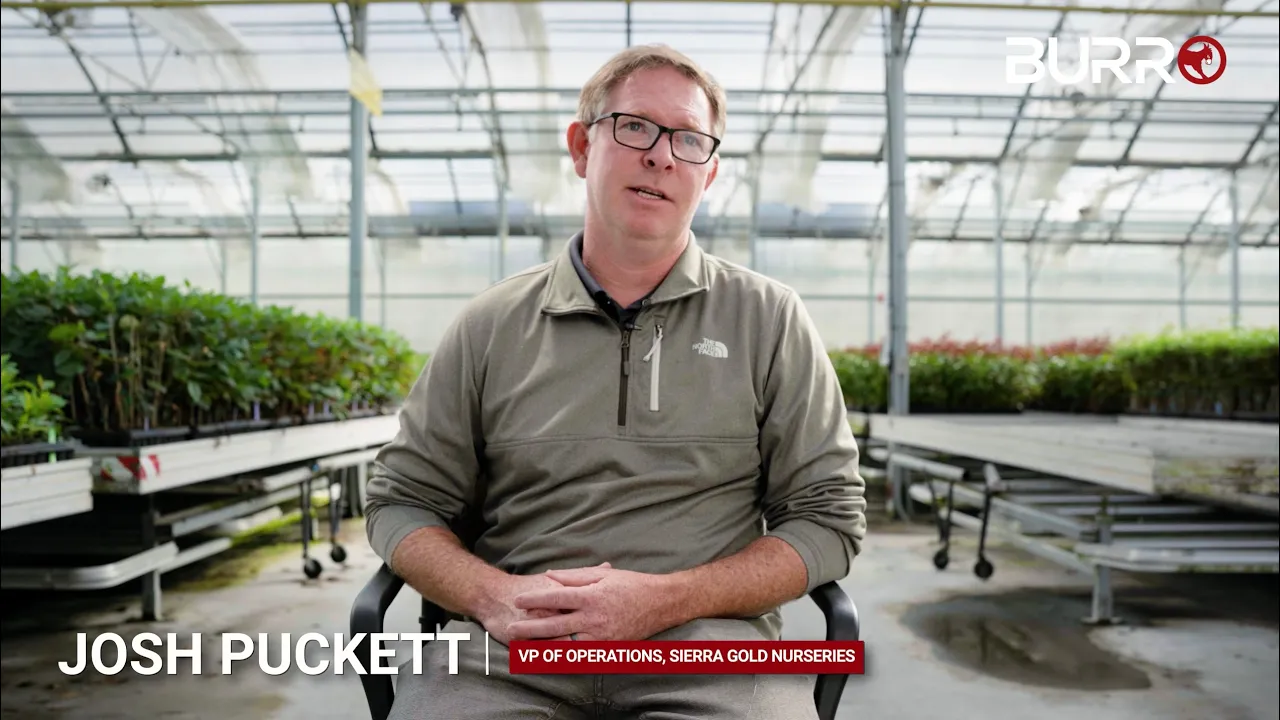
Customer Testimonial
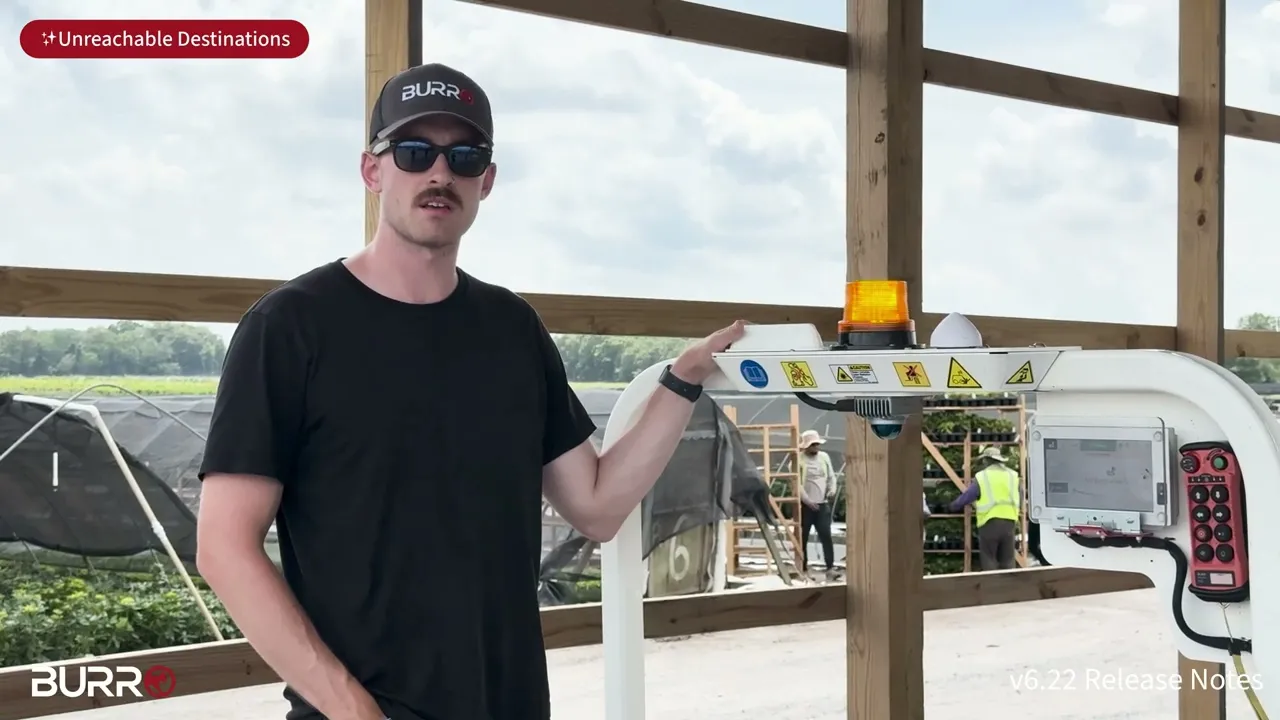
Recent Release

🌟 Featuring Me

Recent Release

🌟 Featuring Me

Recent Release

🌟 Featuring Me

Discovery

Research & Context Building

We partnered closely with customers and Burro’s field engineers and support team to observe real workflows, pinpoint where the legacy UI failed in the field, and iterate quickly based on direct feedback.

Discovery

The system had to scale & adapt to dynamic, real-world operations

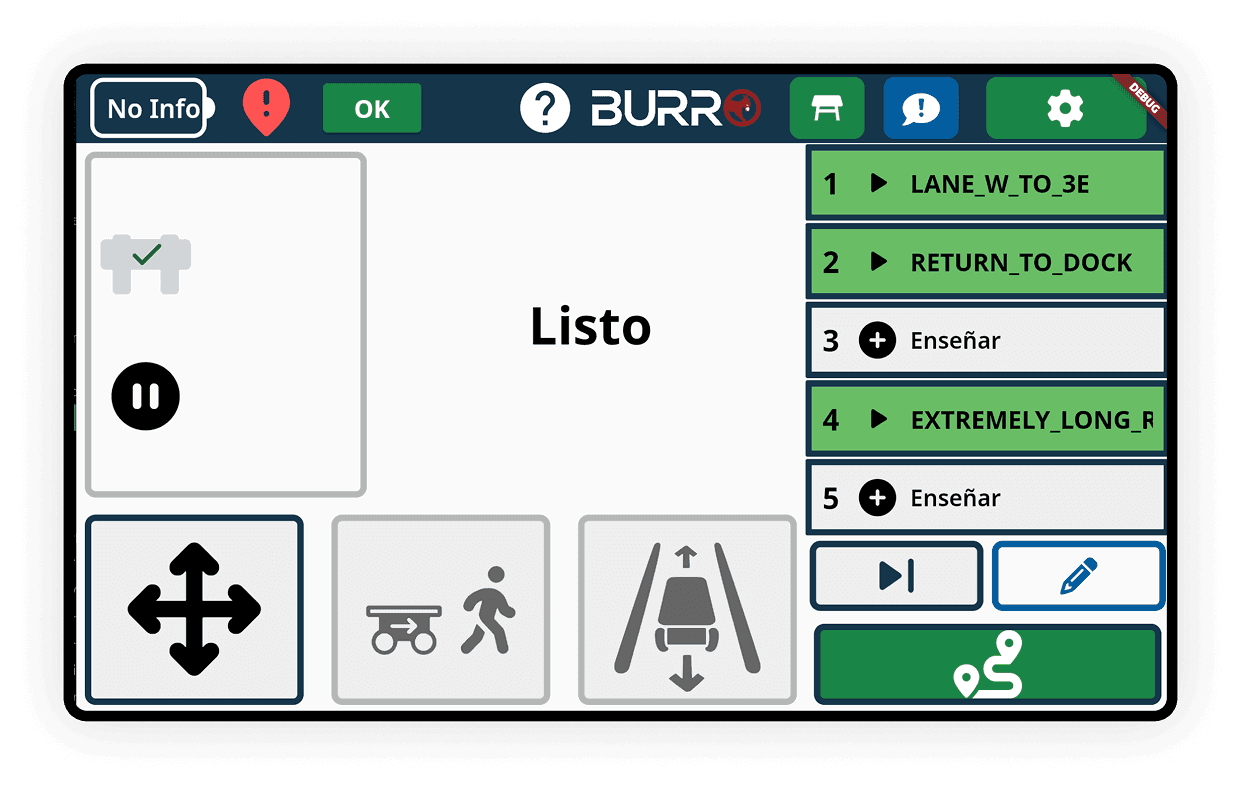
As Burro expanded from row-based hauling into site-wide towing and transport, the operating environment changed fast. Routes were less predictable, destinations shifted day to day, and operators needed to make decisions in the moment. The legacy experience was powerful, but it assumed high-touch usage and consistent workflows.

We ran a focused discovery phase with engineering, support, and customers to understand where the existing system broke down and what the new use case demanded. Field feedback and workflow walkthroughs consistently pointed to the same reality: autonomy only scales when the experience stays simple and confidence-building under real conditions.

Guiding Question

“How can the robot provide real value & ROI to the customer?”

Guiding Question

“How can the robot provide real value & ROI to the customer?”

Guiding Question

“How can the robot provide real value & ROI to the customer?”

Legacy Use Case & Opeartion

Legacy Limitations
Designed for rows
Designed for rows
Designed for rows
High setup overhead
High setup overhead
High setup overhead
Hard product constraints
Complex, institutional knowledge
Customer Needs
Flexible task structure
Adaptive, fast edits
Automated tasks
Automated tasks
Automated tasks
Clear, reliable feedback & guidance

One thing became especially clear during our discovery:

Key Insight

Design for real-world variability, not ideal & rigid workflows

Discovery showed the system couldn’t assume consistent routes, dedicated power users, or perfect conditions. To scale, the experience had to stay clear and confidence-building even when environments change, tasks shift, and a different person steps in mid-operation.

Solution

Final Designs, Deliverables, & Solutions

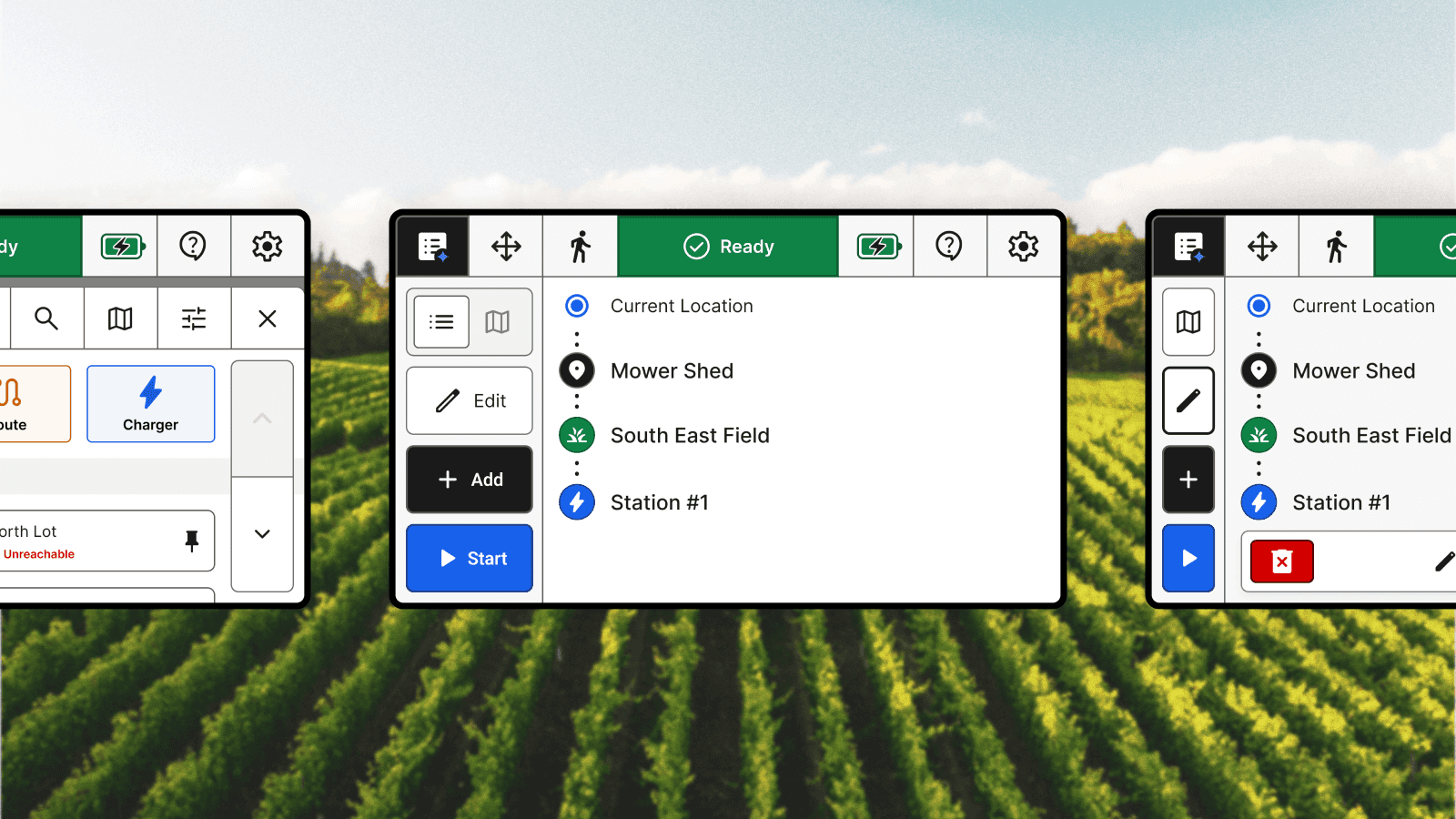
To address these limitations and needs, we rebuilt the experience from the ground up. The focus was a simple, operator-friendly workflow that reduced setup time, improved clarity in the field, and could scale into future task types and environments.

Key Improvements
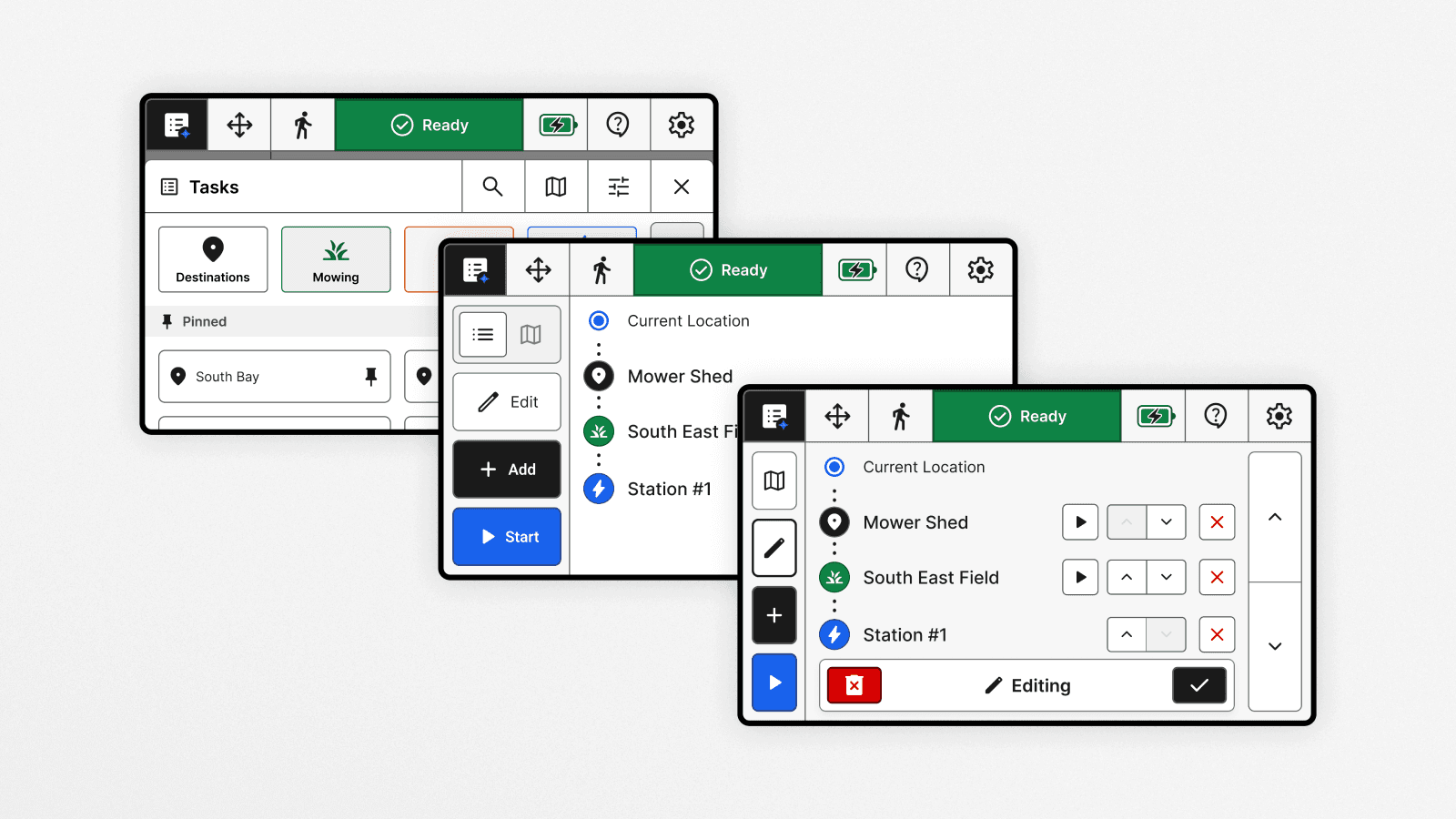
Polished UI
Polished UI
Reimagined app architecture
Streamlined task selection & editing
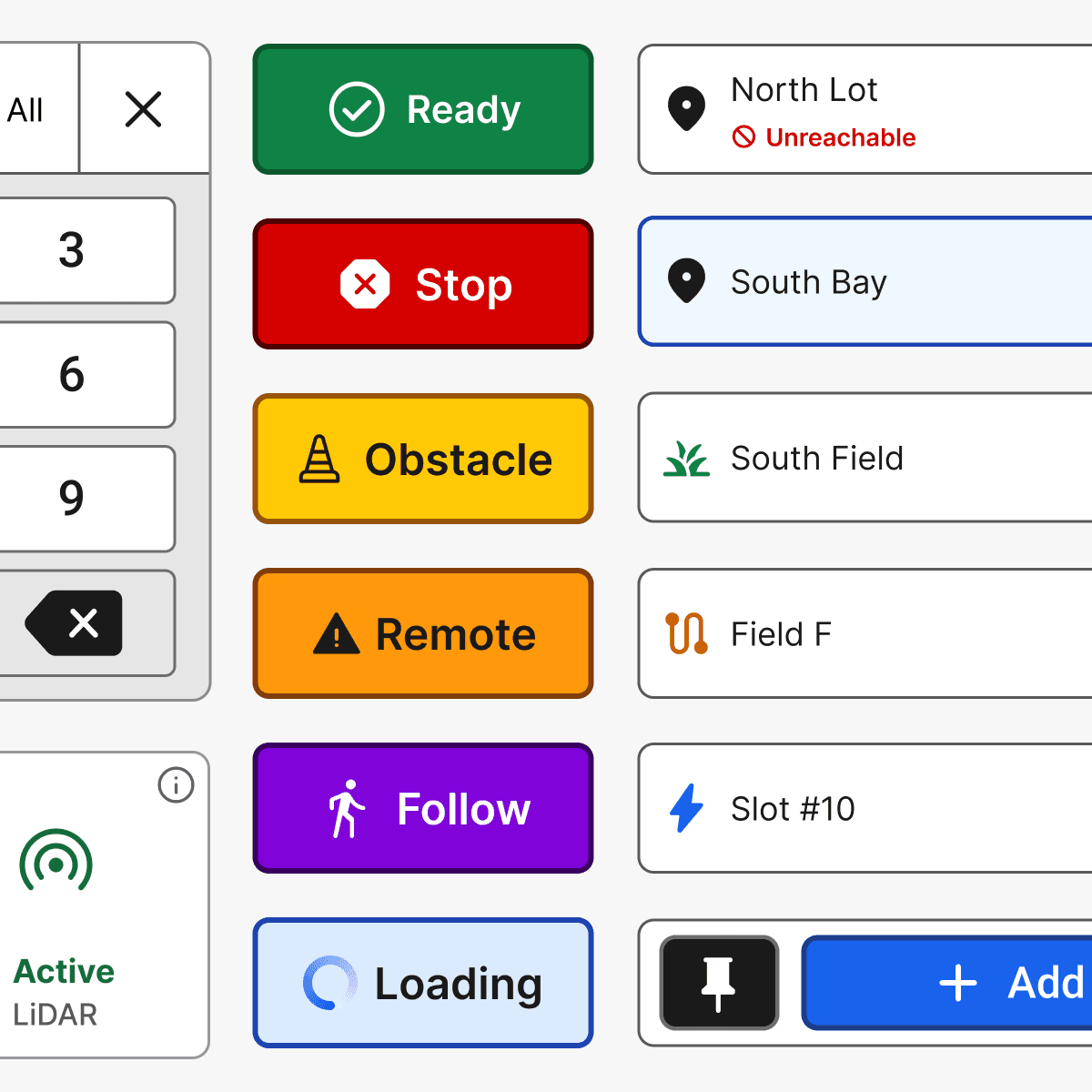
System status & communication

Component Library

Color System

Solution

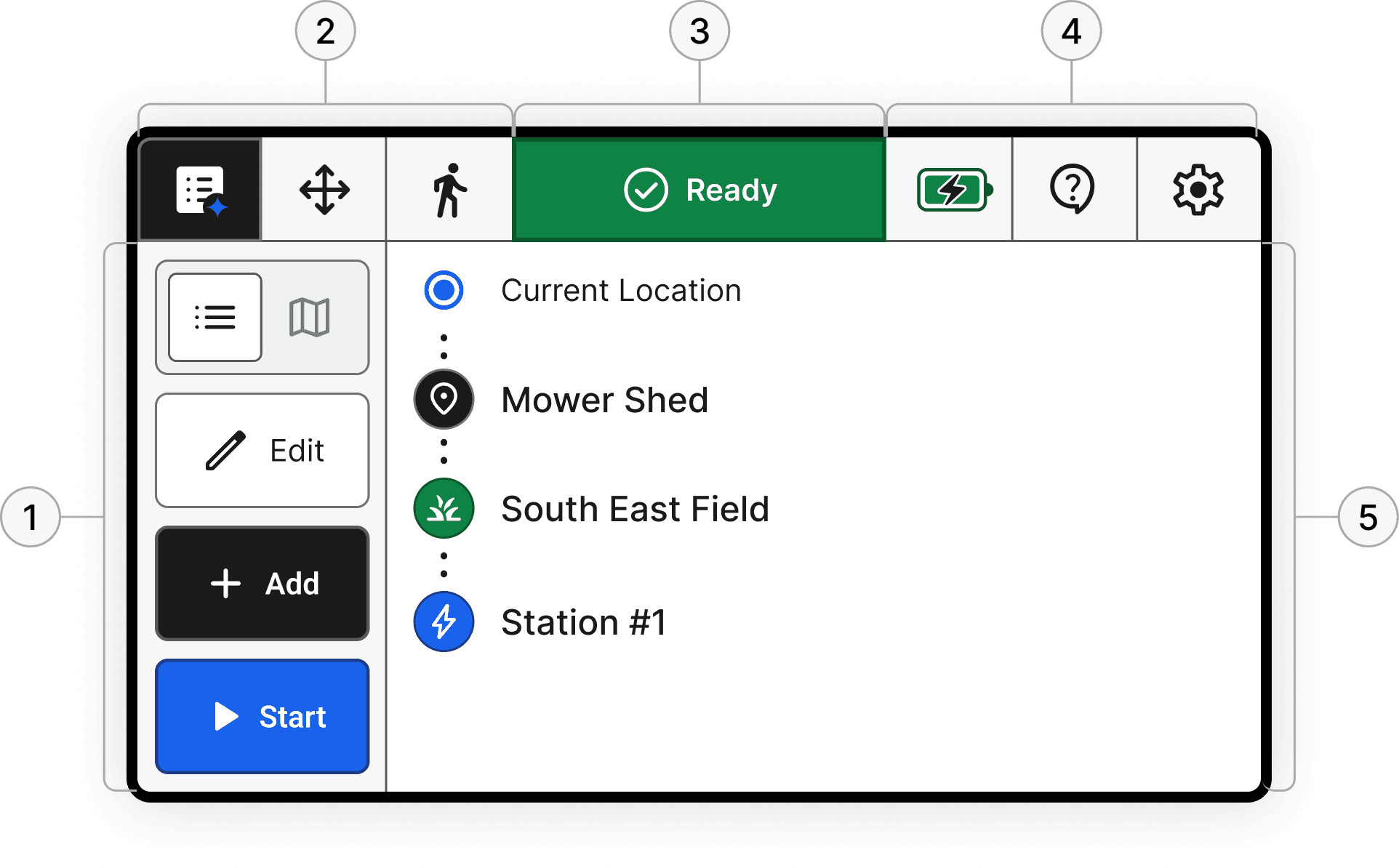
App Navigation & Structure

We rebuilt the app structure around clarity and speed: a single place to manage tasks, switch between modes of operation, and persistent system status so operators can act quickly and confidently.

Key Improvements
Polished UI
Polished UI
Reimagined app architecture
Streamlined task selection & editing
System status & communication

Legacy

Updated ✨
1
Task Action

Primary controls for managing the workflow. Create, edit, and start tasks from one consistent place.

2
Modes of Operation

Quick access to current mode, how the robot is being used, such as autonomy, follow, or manual.

3
System Status

The robot’s current state is always visible. This builds confidence and reduces guesswork during operation.

4
Secondary Status & Actions

Fast access to key info and support actions like battery, help, report issue, and settings.

5
Task List

The main workspace where tasks live. View, select, and manage destinations in the order work actually happens.

Impact

Value realized and measured

This work was especially rewarding because we could measure impact over time after launch. The initial release rolled out to a small set of already-sold robots, then expanded across the fleet as we iterated based on field feedback. The result was a more scalable on-robot workflow that increased product value, supported recurring software revenue, and became part of daily operations for hundreds of people.

3x Software ARR

Task Management helped unlock subscription revenue tied to the software experience.

3x Software ARR

Task Management helped unlock subscription revenue tied to the software experience.

2.5x in Unit Sales

The new capability supported broader adoption and helped unlock a larger market for the product.

2.5x in Unit Sales

The new capability supported broader adoption and helped unlock a larger market for the product.

500,000 Hours

By making the workflow easier to set up and run, customers could operate more efficiently at scale, reducing cost of labor.

500,000 Hours

By making the workflow easier to set up and run, customers could operate more efficiently at scale, reducing cost of labor.

Insights

Lessons learned and takeaways

Beyond the business return, this project shaped how I approach human-robot interaction. It reinforced that the best autonomy experiences are not just powerful. They are easy to understand, easy to trust, and easy to operate in real conditions.

Simplicity and clarity drive adoption & scale

When the technology is complex, the interface cannot be. Clear system feedback and obvious next steps are what turn capability into daily usage.

Real-world variability beats ideal workflows

The system could not assume consistent routes, dedicated power users, or perfect conditions. The experience had to stay clear even when everything changes.

Real-world variability beats ideal workflows

The system could not assume consistent routes, dedicated power users, or perfect conditions. The experience had to stay clear even when everything changes.

Trust comes from predictable feedback

Operators trust autonomy when status, intent, and exceptions are consistent and easy to interpret. Ambiguity reads as failure.

Trust comes from predictable feedback

Operators trust autonomy when status, intent, and exceptions are consistent and easy to interpret. Ambiguity reads as failure.

Next Steps

After the initial release, we continued iterating based on field feedback to improve reliability, expand capability, and refine the operator experience. The latest release is included here.

Recent Release

🌟 Featuring Me

Recent Release

🌟 Featuring Me

Recent Release

🌟 Featuring Me